Dec
17
Will the E15 15% Ethanol Mix Be a Problem For You?
December 17, 2009 | 18 Comments
Its looks like it will be August 2010 before the U.S. Environmental Protection Agency comes in with the whether or not of the adding of 15% ethanol to gasoline fuel called E15 instead or in addition to the 10% E10 mix used widely now. Much press and media attention is being touted for both views, one being its great and the other being its trouble. Both points are true; the task is to figure out if it’s a problem for oneself.
Much is made of the loss of mileage claims for ethanol substitutes. Most are PR stunts, leaving the ill and uninformed with an impression that may be false. The hard chemical reality is that ethanol has lower energy and higher resistance to ignition than gasoline products, even the very high-octane gasoline blends. An ethanol fuel only engine could have a compression ratio as high as 16:1. Its little wonder ethanol was accepted warmly by racing groups.
Ethanol doesn’t have as much energy by volume as gasoline by about a third. In a linear thinking a drop in mileage should come in for E10 at about 3 1/3rd percent. That is complicated by the added boost to octane. In modern computer controlled engines with knock sensors that octane can be quite beneficial if the engine’s compression ratio is high enough to exploit the added octane. Higher compression increases engine efficiency that can level out the mileage loss or improve it. Most, but not all engine computer controllers will seek efficiency up to pre-ignition – those engine owners get a worthwhile advantage from ethanol blends. Whether E15 will take that further is again about the engine’s compression ratio and the sophistication of the computer’s controller.
Another consideration is that ethanol doesn’t ignite as easily; especially in cold weather cold starts. But a little gasoline in the blend solves that problem; even current E85 users don’t notice an issue for cold starting if their engine is in good condition. Fuel injection that does a good job sets up very easy to ignite fuel mix conditions solving any problems up to E85.
Lastly, alcohols have oxygen in the molecules, which can react with fuel system parts. Corrosion, degradation, and other chemical reactions can occur if the materials manufacturers choose to build fuel systems are wrong for oxygenated fuels. The oxygen issue isn’t limited to alcohols; some blame can be assigned to other additives. For older, cheaper, and in particular smaller engines – oxygenates can cause serious problems.
For U.S. autos, most vehicles less than 15 to 20 years old are not going to experience problems other than what age and wear present anyway. E15 might cost an additional 2% loss of mileage or not. But that’s in the hands of the fuel marketers for higher compression engine owners. A poorer grade of gasoline with 15% ethanol can still be low octane. It will be interesting to see if the EPA acts intelligently enough to mandate minimum octane levels, say around 90 for r/m octane rated products.
The biggest problems are going to be for small engine owners. Small gasoline engines are notorious for low cost parts in a highly competitive market. Lawnmowers, snow blowers, chainsaws, boat engines and other small engines may well experience problems with fuel system materials. The older the engine, the lower the price of the engine the more likely that the engine was built with inferior materials. Most are carbureted, so the exasperation level would run high.
This writer has two worthwhile experiences about transitioning to ethanol blends. First was an early 1960s MontgomeryWard lawn mower. The path to using E10 reliably was replacing the metal fuel tank with a plastic one, the metal line to the carburetor with modern hose, an inline filter, and a carburetor kit. The effort worked for a while. A teardown found the fuel bowl had corroded again, an issue solved by using a quality enamel base paint. The mower ran fine for years. The lesson was that ethanol can be used with material upgrades.
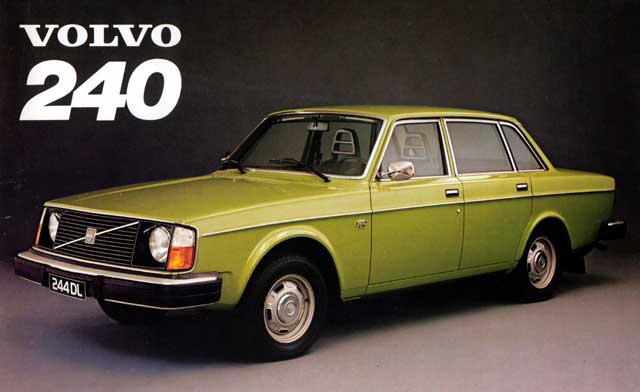
Volvo1975 Model 240. Click image for the largest view.
The second was a 1975 Volvo that had mechanical fuel injection, solid-state ignition, but no computer control. The engine though was a detuned for the U.S. market model, still with 10.5:1 compression. E10 worked well, with fuel mileage in the low 20s. Purchased used, and checked over time, a compression test revealed weak valve springs. When the valve springs were replaced mileage improved significantly into the upper 20s. A close review of the service information offered that the European model had much earlier ignition timing suggesting more advance would help. A timing adjustment to the European specification proved to be too much, but backing off just a couple degrees pushed mileage to over 30, well beyond the highway mileage test when the model was sold new.
The Volvo lesson was instructive. Available compression, examination, upgrades and research and testing allowed a much more full exploitation of E10’s opportunity. Most of the work was due to the vehicle’s age, the valve springs in particular, and done over the course of the first months of ownership. The innovative part was simply to test drive to find the ignition advance, as there was no knock sensor, computer or variable ignition distributor to do it automatically.
E10 can be exploited with an engine with the compression to use E10’s qualities. That is dependent on the fuel marketer’s willingness to blend to higher octane. Lower prices across much of the U.S. make E10 a great deal for the modern higher compression engine owner. You might want to check that owner’s manual and see what your engine’s compression ratio is.
Stay on top of the maintenance. Efficiency losses from poor tune of ignition and fuel systems is an essential maintenance task, mileage will affect parts like those valve springs and doing the work can give substantial improvements. If the compression is there, the tuning and maintenance up to snuff, and you choose 89 or 90 octane E10 or E15, alcohol fuel blends can pay off quite nicely.
For small engines, owners and service personnel will learn what this writer has learned; it’s about the materials, which are inferior now. There isn’t much involved beyond careful inspection and installing better parts.
Say you have a premium fuel engine and wish to use E10 or E15. Octane booster additives are very pricey, usually more than just buying premium, so here’s a tip. Add isopropyl (for even more ignition resistance) in the form of “Isoheat” or other isopropyl gas line dehydrator; say about one bottle to ten gallons. Works for me, and saves about 15¢ a gallon.
Comments
18 Comments so far
Feedburner
Reddit

Stumbleupon


It is nice to view an article that provides useful information about ethanol blends in gasoline. So many of the articles out there are based on wild political views and personal beliefs that it is hard to find truth. Thank you for providing the public with some useful information.
Agreed – a good article without the BS you normally have to wade through.
Brazil has 25% of ethanol and plenty of imported cars (many from the US) and they run just fine.
That should shut up people like this guy whose claims come only from silly lawn mowers and old cars.
Still, America insists in claiming ethanol is not an answer.
In the meantime, Brazil has saved 800 million tons of CO2 since the beginning of its ethanol program 30 years ago.
And what has America done during that time? Talk about lawn mowers and old cars!!!
Hi, Thank you! I would now go on this blog every day!
Thank you
Lewis-
there are 18 million outboard motors in the US and NONE of them are designed to run with 15% ethanol. Thousands of boaters with expensive outboards have had damage form ethanol. E10 has been an disaster for boaters and using E15 will void the warranty of every outboard motor sold in the USA. These are not “silly lawn mowers and old cars”. My twin outboards cost $26,000.
NO E!15
They import flex fuel cars in Brazil.
This will kill every outboard motor in America. This will kill every lawn mower engine in America. This WILL kill your car. That’s right. It will not matter if you’re an Obama supporter or tree-hugging hippy, your car will DIE. Get ready to form a very personal relationship with your local auto mechanic.
Ethanol Lobby = Al Queda.
Ican tell you ther are many issues with ethanol.Yes the octane is there,but you must run a much richer mixture to make decent power. The older small engines will have to be replaced at a much higher cost and emmisions are not improved. This is more lobbying by an industry at the expense of the people.
i like it 😉
Sounds to like someone is out to get rich,and its not me.Let me blow up my outboard I don’t think so.The cost to the outdoors market will never recover.Bass fishing is my life.If you want your e15 take it, but give me something I can use in my boat.New outboards cost 10,000 plus.
Thanks but nothanks EPA.
Odd that there is nary a word about the stupidity of using your food for fuel.
lewis on December 19, 2009 8:02 AM. —
Brazil has saved 800 million tons of CO2 since the beginning of its ethanol program 30 years ago.
Where excatly did they save it? Did they make dry-ice with it mabe? Is CO2 used to make powdered water?
I was there when Gasohol (E10) was first rolled out in the Upper Midwest. My job was auto mechanics. The only significant problems I saw were a few decomposed rubber parts and sunken plastic carburetor floats. Lawnmowers kept running on it and the old Evinrude never missed a beat. I would ask Ethanol detractors to show me the metric on all the horrors previously mentioned above. Keep your opinions and ignorance to yourselves until you have hard numbers for us all.
How can American farmers be working for Al-Queda? Does that mean my Uncle Ted is funding terrorism by making middle-eastern oil less relevant in the world energy scene? You had very well better have your ducks in a row when you answer that one.
Hey Ivor- I had a 1989 Chevy Beratta when Ethanol was introduced and it burned up my fuel injectors three times, costing me $3,000. The mechanics never told me about this until after I sold it for a new Chevy Truck. That’s a hard number for ya.
Another View
I own a simple ethanol test kit and can only speak on my personal experience.
The boat boys are somewhat right. Yea you can run a 9.9 on just about anything but the 275 Merc is a different story. I purchased the tester and have used it for years for my sleds. Snowmobile motors of older design will not deal with even 10% in a very short time the will score and die. This might be related to runing at 9000 RPM unlike your POS mower.
I can’t tell you how many times I’ve found fuel at stations and the pumps don’t say 10% blend and test 10% positive, and the one’s marked 10% have tested as high as 15%. If the regulation is so loose then there may be times when the E15 pump may be E20.
Here’s my real concern.
I own 20 antique cars. None of them are safe for even 10%
Old rubber hoses melt. Rubber needle and seats swell. Corvair fuel pump diaphragm swell to 3 times there normal size.
There was a recall on some last gen camaro’s and firebirds for there nylon fuel line’s melting when exposed to E10.
My friend walked out to his garage one morning to smell raw gas and find it dripping on the floor under his camaro.
The risk here is serious fire caused by fuel leaks.
Its easy to change the parts on a old Grand Am 4 cyl to stand the plastic melting fuel but anybody want to try a V12 JAG ?
As far as the octane ratings and the ECM tuning – Octane ratings only give you a good idea of how resistant the fuel is to self ignition or detonation.
Propane conversions are out there on fleet trucks “Schwanns Ice Cream” and Propane octane rating is well over 120 and it’s actually hard to tune them for even at 12 to 1 it will never ping. The big plus to Propane is it triples engine life.
It will also never make as much power as the same engine running 10/1 on simple Pure Premium Gasoline.
Even thought the Octane is higher the actual burn is slower and the result is a loss of about 10% power.
The way the octane test’s are done the E gas gets a better number simply because its harder to “self lite” under compression pressure. That makes the octane number higher by the test but what you don’t know is that it actually slows down the burn and the expansion just like Propane and that reduces power.
I have a friend that bought a brand new Chevy truck just so they could burn E85 and after a few months they switched back to gas. There reason, reduced mileage, and there view was this – I’m burning fuel and air “combustion” — how can it actually be cleaner to burn more fuel for the same work. Almost 20% more fuel, and for that additional fuel I need more air so I’ve actually used more air for combustion. In the end its more hot air and CO2 out the tail pipe.
Everyone seems to miss this one.
You ethanol enthusiasts are in your own world of misinformation and euphoric ignorance. Ethanol is used in Brazil because they have ALOT of sugar cane, that they don’t need, and are not hurting for food, and they have NO oil! They have made ethanol work for them, and that’s fine, I have no problem with it. But given a choice, ethanol is not the first one, oil is. Ethanol takes more energy to produce than it produces itself, it’s not at all ‘green’. Ethanol is not as clean as we’re led to believe either, not only do you have the byproducts (which are different and in some cases worse than oil products) you also have the byproducts of the the energy used to produce the ethanol in the first place. It’s all about money folks, and yet one more excuse why we shouldn’t use oil products. Oil isn’t perfect, but then again, we don’t eat it! Get your facts from another source than the ones that are promoting it for money…
The nuts in Washington have a loose screw. I think when my small engines fail I’ll mail the units to them.
Ethenal is to the oil companies as baking soda is to coke dealers.
It costs less to produce, they get to cut thier product with it and charge you the same price. So they save money on production and make more money on the sale. All the while you are buying more gas because you are getting less miliage. Ok so it’s maybe one or two miles a gallon but figure that into all the cars on American roads and it ads up into the hundreds of millions of dollars in only a matter of days.
I track my miliage and have been running ethenal free for four months and get 1.8 miles per gallon better miliage that I did running E10. Ethenal also destroyed my Ducati gas tank after it expanded all the way around by more than an inch. Not to mention the fact that it burns hotter so it breaks down catalytic converters causing more harmfull polution. On an individual scale not a big deal but when you take into account all of the cars on our roads ethenal bites.